In many industrial companies, there are still a large number of paper slips that are used for daily work processes. Although digitalization continues to advance, important information is still noted down and passed on on paper.
This can lead to inefficient work processes, delays and errors. In this article, we show you how you can save paper and get rid of paperwork in your industrial company.
Paper-based processes are still widespread in industrial companies, leading to inefficient work processes and delays. Although digitalization continues to advance, important information is still noted down and passed on on paper. Modern digital solutions along the value chain can help to optimize work processes, save time and costs and increase employee satisfaction.
In this article, we take a look at examples of individual departments along the value chain, such as purchasing, warehousing and logistics, production, quality control, customer service and field service. And how industrial companies can save paper by using modern digital solutions along the value chain.
1. Shopping
In purchasing, it is important to collect and organize all information about suppliers and orders. Modern purchasing systems that record and store all data digitally can help here. This gives you an overview of suppliers, delivery quantities and deadlines as well as payments at all times. Automation can also save you time and money.
2. Warehousing and Logistics
Fast and efficient processes are of great importance in warehousing and logistics. This is where digital warehouse management comes in handy, allowing you to view stock levels at any time and know which materials and products are available.
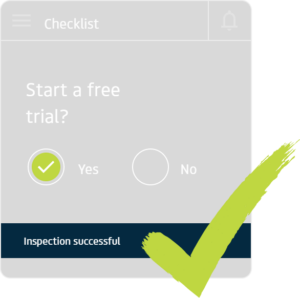
For more efficient inspections in incoming and outgoing goods, Testify is suitable for mobile, digital and fast processing.
3. Production
In production, the main focus is on making work processes efficient and ensuring product quality. This is where digital production systems can help to instruct and track all production processes. For example, you can manage production orders digitally and view the progress of work, which machines are in operation and how high capacity utilization is.
Quality assurance can also be mapped digitally, for example by creating and saving test reports digitally.
4. Quality Control
In quality control, it is important to document and store all data. This is where digital checklists for quality control come into play, allowing all data to be recorded and evaluated.
The data is then analyzed automatically, allowing sources of error to be quickly identified and eliminated, for example.
5. Customer Service
Customer service is all about processing customer inquiries quickly and competently. Digital customer management or ticketing software that records all customer inquiries and automatically forwards them to the relevant employees can help here. For example, you can answer inquiries faster and more reliably and also process complaints more quickly.
Customers also have a duty to maintain, clean and regularly check their appliances. If something is not working, the customer can immediately create a defect using a digital solution.
6. Field Service
Field service technicians work in the field carrying out maintenance and repairs on machines and systems. Mobile applications are ideal here, providing technicians with all the information they need for their work.
For example, orders can be transmitted digitally to the technicians, who can then view all information about the system and the order on site via the application. The work results can also be documented digitally, for example by creating and saving maintenance logs digitally.
Practical example Karl Oswald GmbH: Significant time savings for incoming goods inspections.
With Testify, goods can be inspected “on the fly” during unloading. Instead of 3 days, our team now only needs 1 day.
Thomas Oswald
Managing Director, Karl Oswald GmbH & Co. KG
Read the full success story here
Conclusion
Paperwork in industrial companies can lead to inefficient work processes and delays. By using modern digital solutions along the value chain, you can save paper, time and costs and optimize your work processes.
It is therefore worth investing in digitization and gradually replacing paper slips with digital solutions. Not only can you work more efficiently, but you can also gain a competitive edge and increase customer and employee satisfaction.