The digital transformation has radically changed the way companies operate in recent years. Special software solutions, such as checklist software, play a crucial role in this. But why should a company switch from traditional methods to digital checklists?
We have summarized the most important advantages for you in this blog article.
1. overcoming the paper chaos
Traditional, paper-based checklists can quickly become a confusing mess. In our last blog article, we talked in detail about the persistent use of paper. Error-proneness, time-consuming data transfers and archiving costs are just some of the effects of paperwork in company processes. Digitized checklists provide a remedy by enabling clear structuring of data and information and allowing information to be recorded without media disruptions.
2. process optimization and automation
Checklist software allows companies to standardize repeatable processes and remain competitive in the long term and make optimal use of resources. For example, checklist software can help with the following use cases:
- Quality controls: By automatically recording and analyzing production data, the software can immediately detect quality deviations. This enables fast response times and the immediate elimination of problems before they affect the end product quality.
- Audits: Automated checklists ensure that audits are carried out systematically and completely, taking into account all requirements and standards. Automatic reminders and schedules ensure that no audit is overlooked.
- Safety inspections: During regular safety checks and walk-throughs, the software can ensure that all mandatory checkpoints are checked. It can also automatically detect dangerous conditions or violations and trigger alarms.
- Maintenance planning: Automated schedules and reminders can be used to ensure that all machines and equipment are serviced on time, minimizing unplanned downtime.
- Resource and material tracking: The software can track the flow of materials and resources in real time, avoiding bottlenecks and overstocks and optimizing production planning.
- Batch traceability: In the event of quality problems or recalls, automatic batch tracking enables affected products to be identified quickly and faulty units to be excluded from the supply chain.
Automation in an industrial context not only ensures consistent quality, but also improved safety and efficiency. By eliminating manual processes and being able to access data in real time, companies can streamline their production processes and adapt to changing market conditions.
3. central information management
In today’s business world, where information is both an asset and a resource, it is critical to access data quickly and effectively. Centralized information management through digital checklist software not only provides a unified data source, but also avoids redundant or inconsistent data.
A centralized system can offer advantages in many areas:
- Production: Faster access to the necessary quality data and processes ensures that production lines work efficiently and quality standards are always met.
- Logistics: With a central source of information, supply chains can be optimized and delivery times shortened. This enables better planning and warehouse management.
- Sales and marketing: Teams can access up-to-date product information, customer data and feedback to develop targeted marketing strategies and optimize the sales process.
- Customer service: A centralized system can ensure that customer service representatives have immediate access to relevant customer data and histories, resulting in a better service experience.
- Research & development: With a central database, research and development departments can access previous project data and analyses, which leads to accelerated product development.
The central management of information not only ensures consistency and efficiency, but also that all departments in a company are on the same page and work with the same information. This reduces misunderstandings, increases productivity and promotes a collaborative corporate culture.
4. efficient quality management
The introduction of digital checklists in quality management represents a paradigm shift in the way companies ensure and continuously improve quality. Digital checklists not only make quality management systematic and traceable, but also far more efficient and adaptable.
A systematic approach means that each step in the process is precisely defined and standardized. This ensures that consistent results are achieved regardless of the person carrying out the task. This reduces human error and ensures that products and services always meet the defined quality standards.
Traceability is further enhanced by digital checklists. Every measure, every review and every decision can be tracked precisely, enabling a detailed analysis if required. This is particularly invaluable when investigating quality issues. Instead of relying on unclear or incomplete paper records, quality managers have direct access to all relevant information in a centralized system.
5. time efficiency
Another decisive advantage of digital checklists is the time they save. The simple creation, editing and distribution of checklists speeds up many work processes.
The identification of quality issues is accelerated by the immediate data availability and analysis tools that are integrated into many digital checklist systems. This means that defects and discrepancies can be identified almost in real time, significantly reducing response time.
As soon as a problem is identified, digital checklists also enable faster and more targeted implementation of corrective measures. Through integration with other systems, such as ERP or production control, corrective measures can be automatically initiated, prioritized and assigned to the responsible teams or persons.
6. increase in data quality
In today’s industrial landscape, where data is often referred to as “the new oil”, the quality of data is critical to a company’s success. With high-quality data, companies can work more efficiently, make accurate predictions and make informed decisions. This is particularly important in industry, where even the smallest deviations or errors can lead to major production downtime or quality defects.
Manual data entry, especially when it comes from physical paper sources, provides a lot of room for error. People can enter numbers incorrectly, overlook information or even lose pages that are needed later in a process. Such errors can lead to incorrect analysis, inefficient processes or even unsafe operating conditions.
Checklist software offers a way out here. Automating data collection and processing eliminates many sources of human error. For example, measuring devices can be connected directly to the software so that data is transferred automatically and in real time. This not only speeds up the process, but also eliminates the possibility of human error.
The accuracy and integrity of data is further promoted as digital systems have mechanisms to immediately detect and point out inconsistencies or discrepancies. An additional benefit of digital checklists is the ability to track data histories and revisions, which increases traceability and transparency.
In industry, where processes are often based on finely tuned variables and where quality standards must be strictly adhered to, data quality is not only desirable but often crucial. High-quality checklist software ensures that the data on which business decisions are based is as accurate, up-to-date and reliable as possible.
7. integration and scalability
In the digital transformation, companies are often faced with the challenge of media disruptions that occur when data has to be transferred manually between different platforms or systems. Such breaks are not only time-consuming, but can also lead to errors, as data can be entered incorrectly, lost or distorted. Integrated checklist software offers a decisive advantage here. It enables seamless integration with other company systems – be it ERP, CRM or specialized production control systems. This means that data can be automatically synchronized between systems, eliminating media disruptions and increasing efficiency and data integrity.
In addition, many modern checklist software solutions offer the option of scalability. This means that they can be easily adapted to growing or changing business requirements. A particularly exciting trend in this area is the use of no-code platforms. With no-code, users can create individual applications or extensions that are perfectly tailored to their specific needs without any programming knowledge. This enables companies to continuously expand and adapt their checklist software solution without having to resort to complex programming or external developers.
In summary, integrated and scalable checklist software solutions offer companies the flexibility and adaptability they need to remain competitive in today’s fast-moving industrial landscape. They eliminate media disruptions, increase data quality and enable a fast and efficient response to changing business requirements through no-code customization.
Conclusion
Digital checklists offer an effective solution for eliminating the traditional paper chaos in companies. They help companies to optimize processes, drive automation and make quality management systematic and traceable. Centralized information management enables fast and effective access to data, reducing redundancies and inefficiencies. They also enable significant time savings and ensure higher data quality through automated data capture. Finally, integrated and scalable checklist software solutions allow adaptability to growing business requirements and reduce media disruptions. With such digital solutions, companies are optimally equipped to remain competitive in the modern industrial landscape.
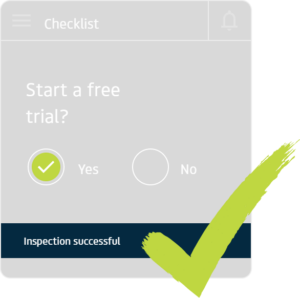
The Testify platform demonstrates how this works in practice: digital checklists can be created without any programming, filled out offline using the checklist app, and evaluated immediately. The use cases illustrate which inspection and documentation processes are suitable for this.